

Complexity is rarely a sign of quality. In physical and visual environments, simplicity is what creates balance, clarity, and long-term usability. Spaces that feel calm, functional, and intentional are almost always the result of deliberate simplification—not minimalism for style’s sake, but restraint with purpose.
Balanced environments are designed by removing what does not serve the experience.
Simplicity Reduces Cognitive Load
Every environment communicates information.
When too many elements compete for attention, the brain works harder to process the space. This leads to fatigue, distraction, and discomfort—especially in homes, workplaces, and learning environments.
Simple environments:
- Reduce visual noise
- Improve focus and decision-making
- Create a sense of calm and control
Balance begins with mental clarity.
Function Becomes Clearer
Simplicity makes purpose obvious.
In well-balanced spaces, users immediately understand how to move, interact, and use what’s around them. There is no confusion about what belongs where or how a space should function.
Key outcomes:
- Clear room hierarchy
- Intuitive navigation and flow
- Fewer unnecessary elements
When function is clear, comfort follows.
Fewer Elements, Better Relationships
Balance is not about symmetry—it’s about proportion.
Reducing elements allows designers to focus on how remaining components relate to each other. Scale, spacing, and alignment become intentional rather than accidental.
This leads to:
- Stronger visual harmony
- Better spatial rhythm
- More effective use of negative space
Simplicity strengthens structure.
Materials and Details Stand Out
When everything competes, nothing wins.
Simple environments allow materials, textures, and craftsmanship to be appreciated. Instead of hiding quality behind excess decoration, simplicity highlights what actually matters.
Benefits include:
- Greater material integrity
- Timeless visual appeal
- Reduced need for frequent updates
Quality becomes visible when clutter is removed.
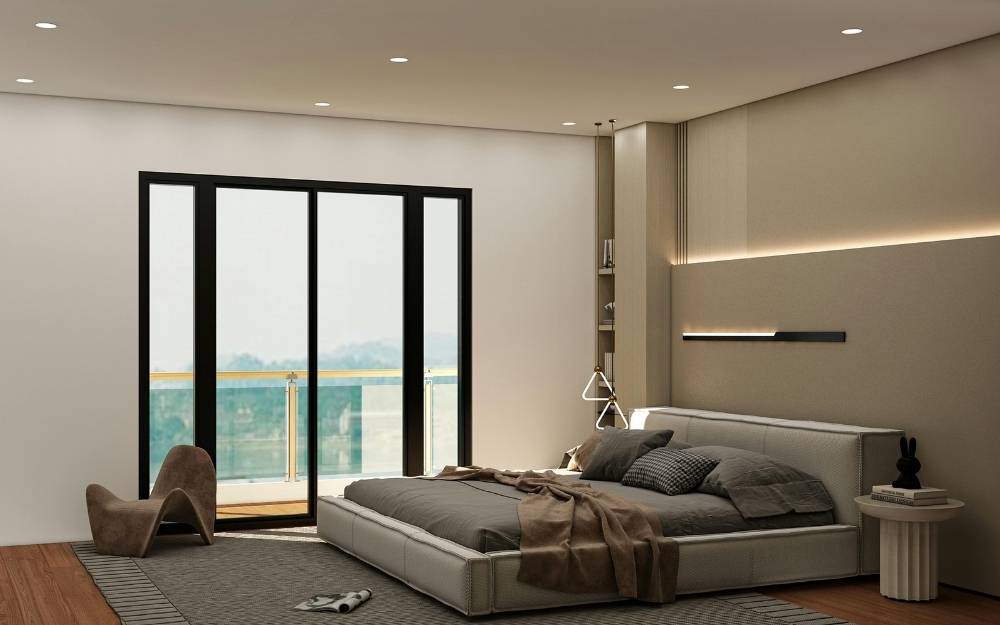
Improved Flexibility Over Time
Over-designed spaces age poorly.
Simple environments adapt more easily to change—new needs, new technologies, or new lifestyles. They provide a strong foundation rather than a fixed outcome.
Balanced spaces support:
- Reconfiguration without disruption
- Easier maintenance
- Long-term relevance
Simplicity is future-ready design.
Emotional Balance and Well-Being
Environment affects behavior and mood.
Simple spaces feel calmer, safer, and more human. They reduce overstimulation and encourage presence, rest, and clarity—qualities often missing in modern environments.
Results include:
- Lower stress levels
- Improved focus and rest
- Greater sense of control
Balance is experienced, not explained.
What Simplicity Is—and Is Not
Simplicity is not emptiness.
Simplicity is not lack of character.
True simplicity is:
- Intentional selection
- Clear priorities
- Removal of excess without removing meaning
It is discipline, not decoration.
Final Thought
Balanced environments are not created by adding more—they are created by choosing better. Simplicity brings clarity, enhances function, and allows spaces to serve people instead of overwhelming them.
In design, simplicity is not the absence of complexity.
It is the mastery of it.
Related Posts
5 Small Space Design Tips for a Functional, Stylish Home
Learn how to optimize small spaces with…