
The Aesthetic Trap: Why Your Home Sounds Like a Gymnasium
We have spent the last decade obsessed with the visual. We want high ceilings, open floor plans, and sleek, hard surfaces that look incredible on a smartphone screen. But there is a silent—or rather, very loud—price to pay for this aesthetic obsession. If you find yourself constantly asking people to repeat themselves or feeling a strange sense of sensory fatigue after an hour in your own living room, your home isn't just 'airy.' It is acoustically broken.
The truth is that modern interior design has largely ignored the science of sound. We have traded the cozy, muffled comfort of the past for an echo-chamber existence. A home should be a sanctuary, a place where the mind can rest. Yet, for many, the home has become an amphitheater for every dropped spoon, every clacking heel, and every hum of the dishwasher. It is time we stop prioritizing how a room looks over how it feels—and sounds—to actually live in it.
The Open-Concept Myth and the Death of Privacy
The open-concept layout was sold to us as the ultimate way to facilitate 'connection' and 'flow.' In reality, it has become a recipe for acoustic chaos. When you remove the walls, you remove the barriers that contain sound. In an open-plan home, the television in the living area competes with the clatter of the kitchen, which in turn bleeds into the home office upstairs. There is no escape.
We have been led to believe that walls are the enemy of modern living, but walls serve a vital biological function: they provide acoustic privacy. Without them, your brain is forced to process every ambient noise in the house simultaneously. This constant auditory processing is a major contributor to stress and irritability. If your home feels loud, it’s likely because you’ve fallen for the architectural trap of thinking 'more space' is always better. Space without boundaries is just noise.
The Tyranny of Hard Surfaces
Beyond the layout, the materials we choose are the primary culprits of a noisy home. The current design zeitgeist favors 'hard' materials: polished concrete floors, marble countertops, glass walls, and minimalist metal furniture. While these materials are durable and visually striking, they are 'acoustic mirrors.' Sound waves hit these surfaces and bounce back with almost zero energy loss, creating a cacophony of reflections.
When a room is filled with hard surfaces, sound lingers. This is known as reverberation time. In a well-designed space, sound should decay quickly. In the average modern 'minimalist' home, sound bounces around like a pinball, muddling conversation and amplifying the smallest noises. To fix a loud home, we have to stop treating textiles as optional 'decor' and start seeing them as essential acoustic tools.
How to Reclaim Your Peace: Strategic Acoustic Fixes
Fixing a loud home doesn't mean you have to move or rebuild your walls. It does, however, require a shift in perspective. You must stop thinking about furniture as merely functional or aesthetic and start thinking about it as sound absorption. Here is how you can systematically dampen the noise in your home:
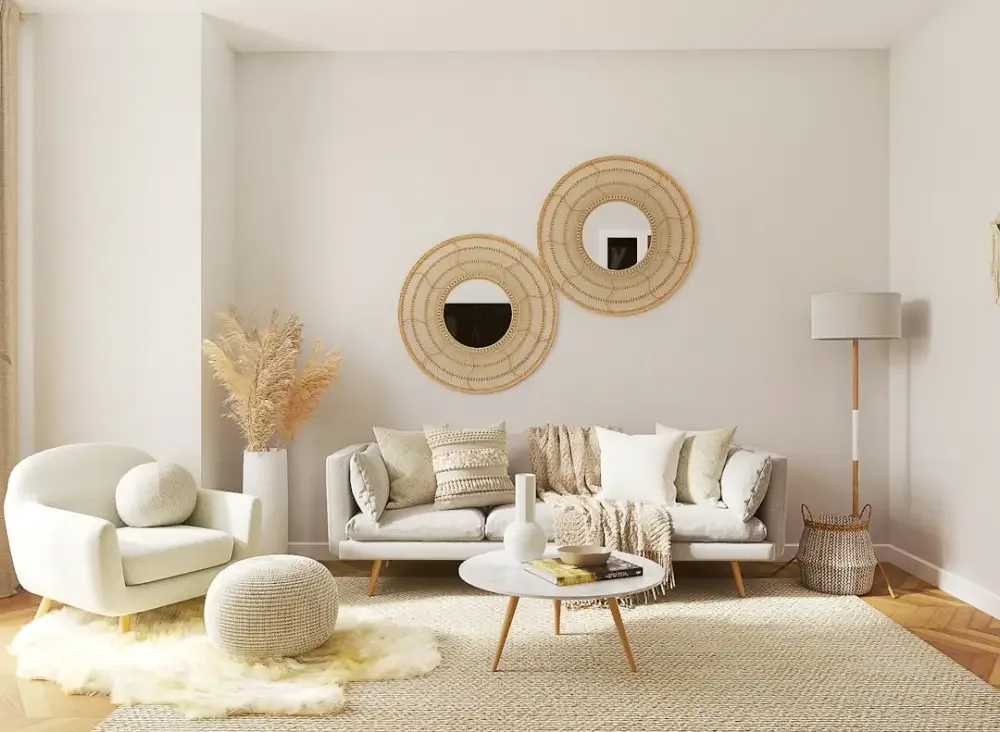
- Prioritize High-Pile Rugs: A thin, flat-weave rug is better than nothing, but it won't do much for acoustics. You need density. A thick wool rug with a high-quality felt pad underneath is the single most effective way to kill floor-to-ceiling echo.
- Double Your Window Treatments: Glass is one of the most reflective surfaces in any home. If you have bare windows or thin blinds, you are living in a sonic trap. Heavy velvet or linen curtains that are double-layered provide a massive amount of surface area to absorb sound waves before they can bounce.
- The Power of Bookshelves: A wall of books is one of the world's best acoustic diffusers. The irregular shapes and depths of books break up sound waves and prevent them from reflecting back into the room. If a room feels too 'live,' add a library.
- Upholstered Furniture Over Hard Shells: That mid-century modern plastic chair might look cool, but it’s doing nothing for your ears. Choose fabric-covered sofas, ottomans, and chairs. Every square inch of exposed foam and fabric is an ally in the fight against noise.
- Incorporate Acoustic Art: You don't need ugly foam wedges. Many high-end design brands now offer 'acoustic panels' that look like abstract art or textured wall hangings. These are specifically engineered to trap sound and can be a game-changer for dining rooms.
Why 'Quiet Luxury' Should Actually Be Quiet
The term 'quiet luxury' has been trending lately, but it usually refers to a color palette of beige and cream. I argue that true luxury is actual silence. A home that feels expensive is a home that feels calm. When you walk into a high-end hotel or a luxury boutique, the first thing you notice—subconsciously—is how quiet it is. This isn't an accident; it's the result of heavy carpets, wall coverings, and intentional layering.
If you are spending thousands of dollars on high-end finishes but your dinner parties sound like a shouting match because no one can hear over the background noise, you haven't achieved luxury. You've achieved a high-gloss failure. We need to move away from 'visual minimalism' and toward 'sensory intentionality.'
Final Thoughts: Design for the Ears, Not Just the Eyes
A home that is too loud is a home that is failing its inhabitants. We are biological creatures, and our nervous systems are highly sensitive to our environments. You can have the most beautiful home in the world, but if the acoustics are harsh, you will never truly feel at ease within its walls. Fixing the noise problem isn't about cluttering your space; it’s about making smarter, more textured choices. It is time to turn down the volume on modern design and bring back the quiet comfort we so desperately need.